
GUIDE / COST CLARITY
What affects the cost of a remodeling project?
ARCHE GROUP / UNDERSTAND REMODELING COSTS
Remodeling cost depends on the defined work, existing conditions, selected products and the conditions under which construction takes place. A useful estimate explains those assumptions and separates construction from other owner costs.
At a glance
Remodeling cost depends on the defined work, existing conditions, selected products and the conditions under which construction takes place. A useful estimate explains those assumptions and separates construction from other owner costs.
Begin with scope, not a generic rate
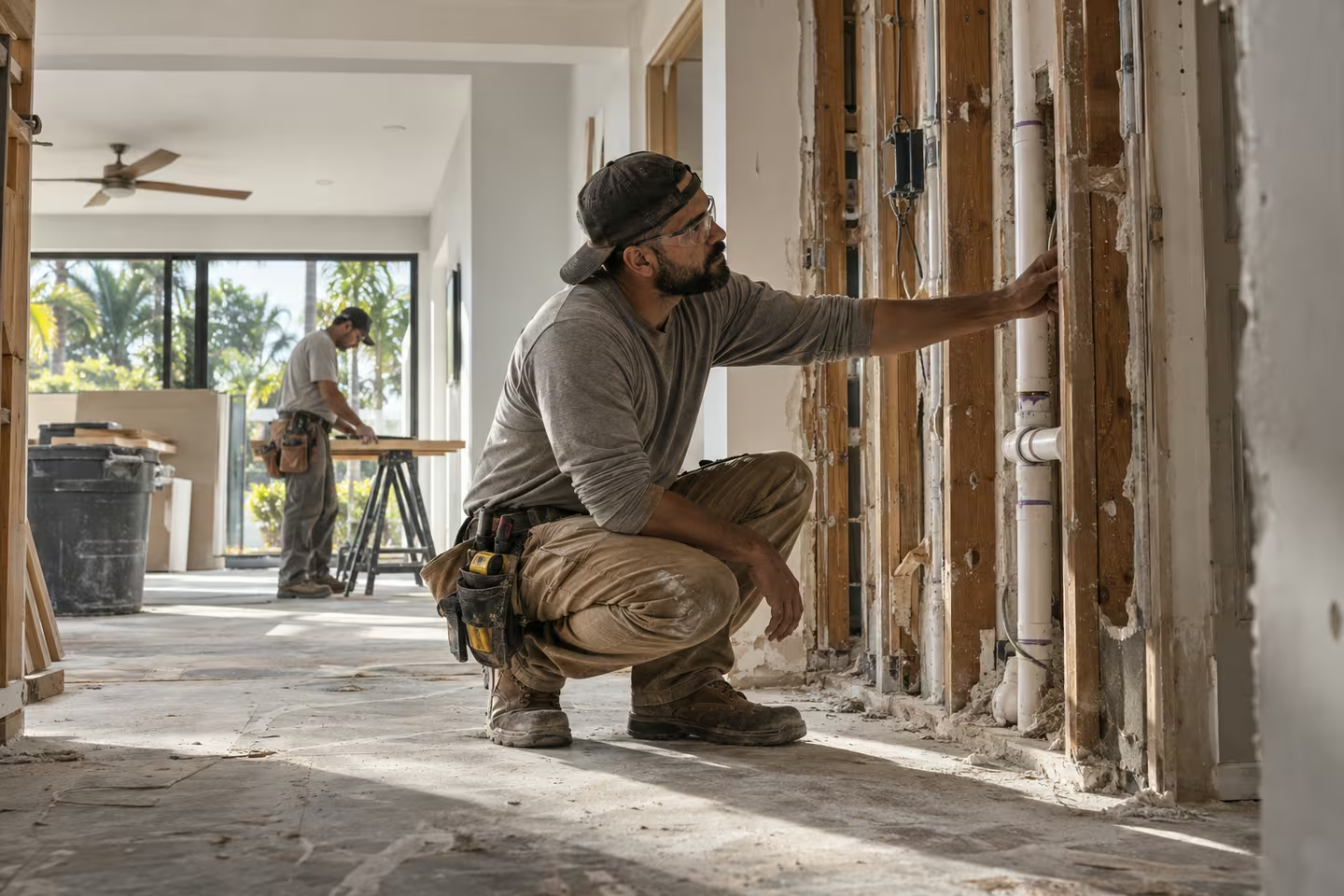
A floor area alone does not describe a remodel. Keeping a layout may involve different work from moving walls or systems; work in one room can also affect adjoining surfaces and access. Describe the intended result and ask which construction activities it requires.
For residential remodeling, review the existing home alongside the drawings. For commercial construction, include the intended use, building requirements and the specialist information needed for that scope.
Make existing-condition assumptions visible
A site review helps identify visible constraints, but concealed conditions may remain unknown until investigation or authorized opening-up. Ask how assumptions are documented, what additional investigation is proposed and what happens if the actual condition differs.
Illustrative example: replacing a finish in the same location and relocating services to a new layout can look similar in an inspiration image. Their demolition, coordination and reinstatement requirements can be quite different.
Resolve selections and procurement
Product specifications affect what is being purchased and installed. Keep a decision list for finishes, fixtures and equipment. Record approved alternatives, owner-supplied items and who checks compatibility. Ask suppliers and the contractor to confirm current availability for the actual selection.
Where a selection is unresolved, ask how it is treated in the proposal. An allowance should describe its coverage and adjustment method, so it does not become a hidden assumption.

Account for how the site operates
Work hours, occupied spaces, elevator reservations, delivery routes and protection arrangements may change the construction approach. State these conditions early. A commercial premises that stays open may require a different sequence from a vacant interior.
Ask for project-specific treatment of access, temporary facilities, disposal and coordination. Keep scope differences visible when comparing construction proposals rather than assuming a single total covers every operational requirement.
Separate construction from the wider owner budget
Prepare a budget with distinct categories: the agreed construction scope, separate design or consultant services, approval-related expenses, owner purchases and any other project costs. Record where each cost sits and avoid counting an item both in the contractor’s proposal and in an owner purchase list.
For properties with possible flood-related considerations, FEMA’s Flood Map Service Center is an official starting point for flood hazard information. Ask the relevant local authority and design professionals which project requirements apply; a map lookup alone does not determine the scope or its cost.
Ask for an estimate you can update
Keep the estimate linked to a date, drawing revision, assumptions and open decisions. Ask how long the proposal remains valid and what triggers a revised price. Discuss how any owner reserve will be held and approved; this guide does not prescribe a standard percentage or quote market prices.
- Which work is included and excluded?
- Which selections are final and which are allowances?
- Which existing conditions remain unverified?
- Which fees and purchases sit outside construction?
- How are changes reviewed and accepted?
Turn uncertainty into the next action
Use the construction bid package checklist to organize missing inputs. ARCHE GROUP’s first review should focus on the actual property, drawings and scope; a conversation does not establish a fixed price or guarantee that an initial budget is sufficient.
Sources & further reading
Primary references for this general project-planning guide. The project contract and the authority responsible for the property determine the actual requirements.
LET’S TALK ABOUT YOUR PROJECT
YOUR NEXT PROJECT.
A CLEAR FIRST STEP.
Share your plans, project location and bid deadline.
Let’s begin with the scope that matters.